
Health at Every Size (HAES): a weight-neutral, weight-inclusive approach to health
Over the past decade, Health at Every Size (HAES) has gained visibility and reached broader audiences. The Association for Size Diversity and Health (ASDAH) defines health as more than the absence of illness, limitation, or disease. In this framework, “health exists on a continuum that varies with time and circumstance for each individual,” according to ASDAH.
Rather than centering weight loss, HAES offers a way for medical providers and individuals to approach health without focusing on the number on the scale. Moreover, the framework encourages nourishing eating and enjoyable movement.
Key takeaway: Health-promoting behaviors—not weight—form the foundation of the Health at Every Size approach.
Why Health at Every Size Matters in a Diet-Focused Culture
Diet culture often defines health in terms of body size, weight loss, and appearance. However, a weight-neutral approach to health challenges this narrow view. Over time, this shift can reduce shame and support consistent access to medical care,
For many people, especially those who have experienced weight stigma or medical trauma, this shift feels more supportive and sustainable.
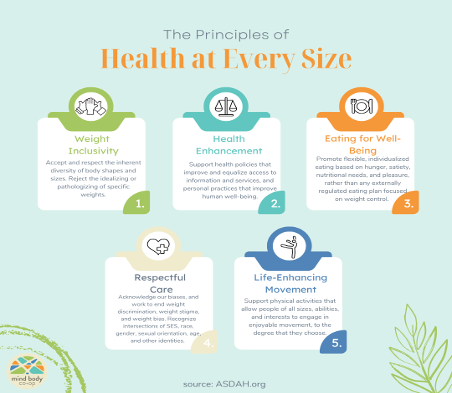
Health at Every Size (HAES) Principles and Core Values
Key principles of the HAES framework include:
Together, these principles support weight-inclusive care that centers dignity, access, and individualized health goals.
To explore these principles further, visit ASDAH.org.
Putting the Health at Every Size Framework Into Practice
In weight-neutral healthcare settings, providers often focus on markers such as blood pressure, lab values, sleep, stress, mobility, and mental health. Rather than relying on weight or BMI alone, this approach emphasizes overall functioning. For example, clinicians increasingly evaluate a range of health indicators beyond body size when assessing well-being.
Similarly, HAES-aligned nutrition counseling prioritizes nourishment, satisfaction, and body awareness. In contrast to diet-focused models, movement prioritizes well-being and enjoyment over weight control.
Common Myths About Health at Every Size (HAES)
Despite growing research, misunderstandings about diet culture versus Health at Every Size still shape public perception.
❌ Myth: HAES promotes ignoring health
✔ Reality: Instead, it supports health behaviors without making weight loss a requirement.
❌ Myth: Weight has no relationship to health
✔ Reality: In practice, health reflects genetics, access to care, stress, trauma, and social conditions—not weight alone.
❌ Myth: HAES discourages responsibility
✔ Reality: On the contrary, it encourages sustainable self-care without pressure to change body size.
Frequently Asked Questions About Health at Every Size
Is Health at Every Size anti-weight loss?
No. Rather than prescribing weight loss, the focus remains on health-promoting behaviors and quality of life.
Does the HAES approach ignore medical risk?
Not at all. Instead, providers address risk through behavior change, access to care, and social determinants of health.
Is Health at Every Size evidence-based?
Yes. Research on weight stigma, dieting outcomes, and weight-inclusive care supports the HAES framework.
How does Health at Every Size differ from traditional dieting?
While dieting centers on weight loss, this approach emphasizes sustainable behaviors and body respect.
Who May Benefit From a Health at Every Size Approach
As a result, this approach often supports people with chronic dieting histories, eating disorders, or weight cycling. Additionally, athletes and individuals with medical trauma may find it helpful.
Importantly, it also plays a role for people navigating systemic bias in healthcare, including those in marginalized bodies.
Research Supporting Health at Every Size and Weight-Inclusive Care
Collectively, these studies highlight the impact of weight stigma, dieting, and weight-inclusive care on health outcomes.
- 📄 Impact of weight bias and stigma on quality of care
- 📄 The stigma of obesity: a review
- 📄 Diets are not effective obesity treatments
- 📄 Weight change and mortality in older adults
- 📘 Fearing the Black Body
If you’re seeking weight-neutral support, appointments with Mind Body Co-op’s registered dietitians and therapists provide a collaborative space to support both physical and emotional well-being.