
Challenging Myths About Disability and Embracing Disability Acceptance
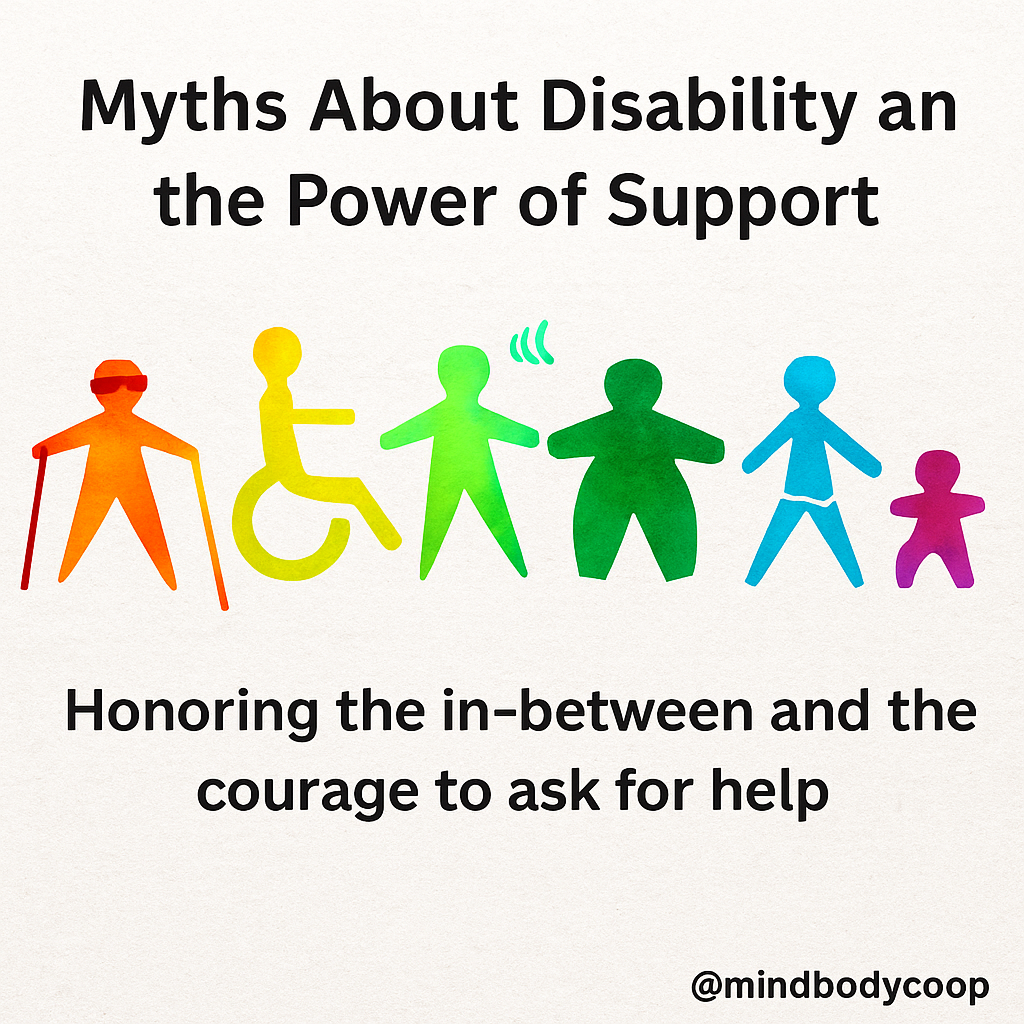
Each year on December 3, International Day of Persons with Disabilities invites us to reflect on accessibility, acceptance, and the myths about disability that shape how we see ourselves and our communities. Additionally, it is a day to honor the experiences of disabled people and challenge internalized ableism. It is also a time to imagine a world where accommodations and support are expected, not exceptional.
As a kid, I desperately wanted to ride a bike like my friends. For example, I would watch them race up and down the block, laughing and carefree, while I tried repeatedly to find my balance. No matter how hard I tried, my body wouldn’t cooperate. I refused a tricycle — I didn’t want to stand out or look different — and on the outside, I acted like it was no big deal. However, inside, it stung. Not being able to ride a bike became one of the first moments that put a magnifying glass on how different I felt from everyone else.
Moreover, that quiet realization followed me for years. I learned early on how to conceal the things I couldn’t do and act as if they didn’t bother me. Growing up, I internalized many messages about independence, toughness, and avoiding inconvenience to others. Later, those beliefs stayed with me long after they stopped serving me.
As I’ve learned more about my own disability and how it impacts my daily life, I’ve had to unlearn a lifetime of myths about disability and internalized ableism that I didn’t even realize I was carrying. Therefore, International Day of Persons with Disabilities feels like the right time to name them — and let them go.
Each myth about disability that I have carried has shaped how I see myself and my place in the world.
Because the truth is: disability has taught me far more about strength, self-awareness, compassion, and connection than any version of “independence” ever did.
Living in the In-Between: How Myths About Disability Shape Identity
Additionally, I felt like I spent many years living in that gray area — not fitting fully into the disability world and not fitting neatly into the able-bodied world either. It created a kind of identity limbo, unsure if I should acknowledge my disability or keep minimizing it to make other people more comfortable.
In addition, invisible disabilities, fluctuating symptoms, neurodivergence, chronic illness, and tic disorders all exist on spectrums. Embracing my disabled identity has become a powerful act of self-acceptance and truth-telling. Your experience counts even if it doesn’t match what others expect — and even if it changes day to day.
Therefore, you deserve to be acknowledged for your whole self, disability included, without needing to justify or prove anything.
These myths about disability can quietly shape how you see yourself, even when you are doing your best to move through the world.
Ultimately, this in-between space represents a valid experience of disability.
Myth #1: Myths About Disability and the Belief That “Disabled Means Broken”
One of the most harmful myths about disability is the idea that disability is a flaw — something wrong with you that needs fixing. Meanwhile, when you grow up in an able-bodied world, it’s easy to internalize the belief that your body or brain is supposed to function a certain way, and if it doesn’t, the problem is you.
But disability isn’t a personal failing. Additionally, it’s a form of human diversity. My body isn’t broken; it just moves through the world in a different way.
What is broken are the systems, environments, and expectations that weren’t built with people like me in mind. Therefore, accessibility isn’t a bonus or a luxury — it’s the foundation of inclusion and belonging. True accessibility creates environments where people with all kinds of bodies and minds can thrive.
Research Spotlight: Internalized Ableism
Studies show that many disabled people learn to hide their disabilities, minimize their needs, or feel like a burden—not because anything is wrong with them, but because society has taught them to feel this way. Furthermore, internalized ableism is strongly linked with shame, self-doubt, and the belief that disabled people must constantly “prove” their disability or their worth.
Myth #2: Myths About Disability and the Belief That Asking for Help Is Weakness
This myth lodged itself deep. Additionally, I used to believe that the strongest people handled everything alone. In my mind, asking for help was a last resort or proof that I wasn’t capable enough.
I wore my independence like a badge of honor, avoiding asking for help and carrying an internalized shame whenever I couldn’t manage everything on my own. I pushed my body past its limits more times than I can count, convincing myself that needing support meant I wasn’t trying hard enough. After many years of doing my own work, I’ve begun to learn that asking for and receiving help is not only okay, but also essential. It’s a sign of strength and a reflection of trust in others.
But disability taught me that interdependence is not only normal — it’s healthy.
Now I understand:
- Asking for help is a communication skill.
- Additionally, knowing your limits is a sign of emotional maturity.
- Setting boundaries is a form of strength.
- Furthermore, support creates sustainability, not dependence.
There’s nothing weak about acknowledging you need someone’s assistance, whether it’s accommodations at work, help organizing your day, emotional support, or simply allowing yourself to rest before you crash.
The version of myself who pushes through everything alone burns out.
Meanwhile, the version of myself who asks for help actually thrives.
Research Spotlight: Disability Pride & Mental Health
Research shows that embracing disability identity—also known as disability pride—can significantly improve mental health and reduce shame associated with internalized ableism. Moreover, disabled people who move toward self-acceptance report lower anxiety and depression, higher resilience, and greater confidence.
Myth #3: Myths About Disability and the Misconception That Accommodations Are Special Treatment
Accommodations are not privileges — they are access points.
They level the playing field, reduce overwhelm, and prevent burnout. Everyone benefits when environments become more inclusive. Therefore, I’ve had to teach myself that needing accommodations doesn’t make me a burden. It makes me human. Asking for what you need isn’t asking for “extra.” It’s asking for equity — and that’s exactly what accessibility is about.
In October 2024, my mobility changed, and I was incredibly frustrated and scared. Additionally, this was the moment I had feared as I got older — the one where my body would no longer move the way I wanted it to. But as I’ve adjusted to a new normal, I’ve realized that using an electric wheelchair has completely transformed my relationship with my body and my disability.
Instead of feeling limited, I feel freer. Therefore, I find myself wanting to get out and do more because I’ve discovered a new level of accessibility that allows me to move through the world without constant fear of falling. At the end of the day, I’m in less pain and have more energy for the things that matter most.
What once felt like a loss has become a tool for empowerment — one that has helped me rebuild trust and compassion for my own body.
Research Spotlight: Accommodations
Research from the Job Accommodation Network (JAN) suggests that most workplace accommodations are either cost-free or minimal, often leading to improved retention, productivity, and overall workplace morale. As a result, these findings reinforce that accommodations are not special treatment—they are evidence-based tools that create equity and reduce barriers.
What Disability — and the Myths About Disability — Have Taught Me About Strength
Disability has reshaped my definition of strength.
Additionally, it has taught me that strength is:
- Listening to your body instead of fighting it — choosing compassion over criticism, and realizing that self-listening is a form of self-love.
- Resting without shame
- Being honest about your limits
- Allowing others to support you
- Self-advocacy — speaking up for your needs, even when it’s uncomfortable
- Letting go of perfectionism
- Making peace with the in-between
Strength used to look like pushing myself past exhaustion.
Meanwhile, it now looks like I was honoring my capacity before the crash.
Letting go of internalized ableism is a process of returning to yourself — releasing shame and remembering that self-compassion is not indulgent; it’s a protective act.
Letting Go of Myths About Disability — and Moving Forward
These myths about disability don’t disappear overnight. Therefore, it’s a lifelong unlearning. But every time I choose self-compassion over shame, or ask for help without apologizing, or claim my disabled identity without minimizing it, I reclaim a piece of myself.
If you live in the in-between too, I hope you know this:
You are enough.
You deserve support.
Most importantly, you don’t have to prove anything.
Ultimately, you belong in disability spaces, within your community, and in conversations about accessibility.
You are already whole. You always have been.
If you are interested in working with Courtney Thompson, you’ll find a space where your in-between is honored, your story is seen, and your growth is supported with compassion and clarity.