
Part 1: Caffeine and Dopamine in the Brain
Seasonal changes in the Midwest affect dopamine and the brain, shaping motivation, energy, and mood.
That means shorter days, longer nights, and colder temperatures. It also brings stressors like exams, performance reviews, and a calendar full of holiday gatherings.
Fewer daylight hours and busy schedules can drain energy, especially if you’re “solar-powered” (read: sensitive to sunlight levels) like me. Colder weather can make it hard to get out of bed. That’s understandable, yet it can lead to skipping self-care—showering, eating breakfast, meditating, or exercising.
So, how do we boost energy in those weary, bleary moments? We turn to stimulants, which influence dopamine and the brain in powerful ways.
How Caffeine Influences Dopamine and Focus
Most people know coffee, tea, and soda as sources of caffeine. Tea and cocoa drinkers also get theophylline, a similar compound. We all know what caffeine does—it helps you feel less tired. But how does it work? The answer links directly to how caffeine affects dopamine and the brain, guiding alertness and motivation.
While we’re awake, the brain gradually builds up adenosine, a molecule that relaxes and dilates blood vessels as part of the parasympathetic “rest and digest” system. That buildup is why we feel tired after many hours. When adenosine binds its receptors, vessels dilate, lowering blood pressure so the heart and lungs can rest. During sleep, adenosine naturally drops. When we stay awake, it keeps rising, and fatigue follows.
How Caffeine Affects the Body and Dopamine
After you drink it, caffeine reaches adenosine A1 and A2A receptors in the brain, heart, and lungs. It blocks adenosine and takes its place. As a result, vessels contract, blood pressure rises, and your heart beats faster. With adenosine blocked, you feel more awake. Go, go caffeine! This same mechanism highlights caffeine’s relationship with dopamine and the brain, which shapes energy and emotional regulation.
Too much caffeine can overstimulate. Ever felt a pounding heart, racing thoughts, or shaky hands? Adenosine supports “rest and digest,” while caffeine pushes “fight or flight.” That shift increases adrenaline. Excess adrenaline brings tension, hyper-alertness, and clammy hands—effects tied to how caffeine influences adenosine receptors in the cardiovascular system.
Balance matters. Enough caffeine lifts fatigue; too much adds stress. Caffeine also lingers. Sensitive folks (like me) may still feel alert 10–12 hours after a morning cup. Typically, its half-life—how long it takes for half to be cleared—ranges from 5 to 6 hours.
Caffeine Levels and Energy Through the Day
An eight-ounce coffee has about 100 mg of caffeine. Drink it at 7 AM and ~50 mg remain by noon, ~25 mg by 5 PM, and ~14 mg by 9 PM.
Now imagine two people who feel tired at ~75 mg. That threshold arrives in about two hours, so both grab another cup. Their levels jump to ~175 mg. It will take six hours to drop again. If one stops there and the other drinks a third cup at 3 PM, the first won’t hit 75 mg until ~9 PM. Meanwhile, the second now carries roughly five times as much by evening, which can make deep sleep harder. These swings also affect dopamine and the brain, shifting alertness and fatigue patterns.
Caffeine Withdrawal and Dopamine Balance
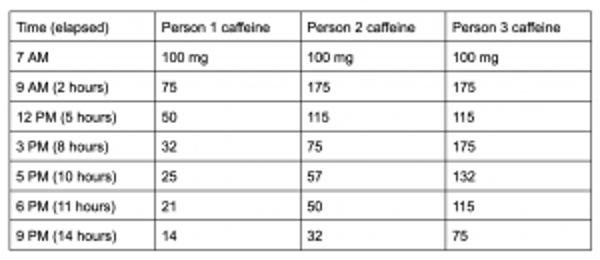
Caffeine’s breakdown rate varies widely. The average half-life is around 5 hours, but it can range from 1.5 to 9.5 hours, depending on genetics, metabolism, and environment. That spread helps explain the chart above. In some people, caffeine simply sticks around longer.
Quit suddenly, and withdrawal may follow. Fatigue and headaches often show up because caffeine no longer tightens brain vessels. Since caffeine also sparks adrenaline, you may feel low on energy or unfocused without it. There’s more to this shift than adrenaline—it also involves dopamine and the brain.
Dopamine regulates reward and satisfaction, so small joys—a sunrise, a good meal, a hug—support daily mood. Unlike drugs such as cocaine, caffeine doesn’t flood the brain with dopamine. Instead, it helps the brain use dopamine more efficiently by boosting receptor sensitivity. Many consumer and medical sources echo this, noting that coffee supports alertness through its effects on dopamine signaling and mood. When we cut caffeine, changes in dopamine and the brain can bring irritability. Tapering slowly helps the body rebalance.
Mind Body Co-op Services
If you want a clearer picture of how stimulants shape dopamine and the brain, Mind Body Co-op’s
Medication Management team, Neuropsych Assessments with Dr. Beth Elia, and Addiction Recovery with an Addictions Specialist
Elizabeth Schaefer may be a good fit.
,
Learn more about these services here!
Stay tuned for future posts on other stimulants—nicotine, medications, amphetamines, and cocaine—and how they affect our bodies and brains. Ongoing work even explores caffeine’s ability to alter dopamine pathways tied to reward and addiction.